Incorporation of Links
Why use Descriptive Links?
Online classes frequently utilize external links to orient students to materials that are relevant to class. Whenever possible, these links should be descriptive text links, rather than copying and pasting a full URL. Not only can including full URLs lead to cognitive overload, but for students who use assistive technology like screen readers, that technology will read out the full link.
For example, instead of providing "https://ctl.unm.edu/instructors/explore-new-ideas/workshops/index.html " provide a descriptive link such as "visit the CTL website to register for upcoming workshops."
With descriptive links, the screen reader will read the text you have included and identify that text as a link for the student, so avoid phrases like ‘click here’ when orienting students to links.
Other acceptable examples of descriptive links:
How to Use Descriptive Links:
Microsoft Word
In programs like Microsoft Word, first highlight the applicable text. Then, right click on the highlighted text and select ‘hyperlink’. You can then copy and paste the URL you want the selected text to link to in the pop up menu Word provides.
Canvas
In Canvas, when editing an assignment, discussion, etc., highlight the applicable text, select the link icon and choose either external link or course link, then finally copy and paste the URL that you want the text to link to.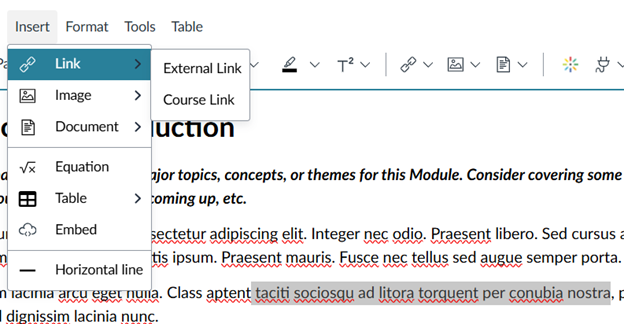
Web Content Accessibility Guidelines (WCAG) success criteria
Providing descriptive links meets Success Criteria 2.4.4 and 2.4.9.